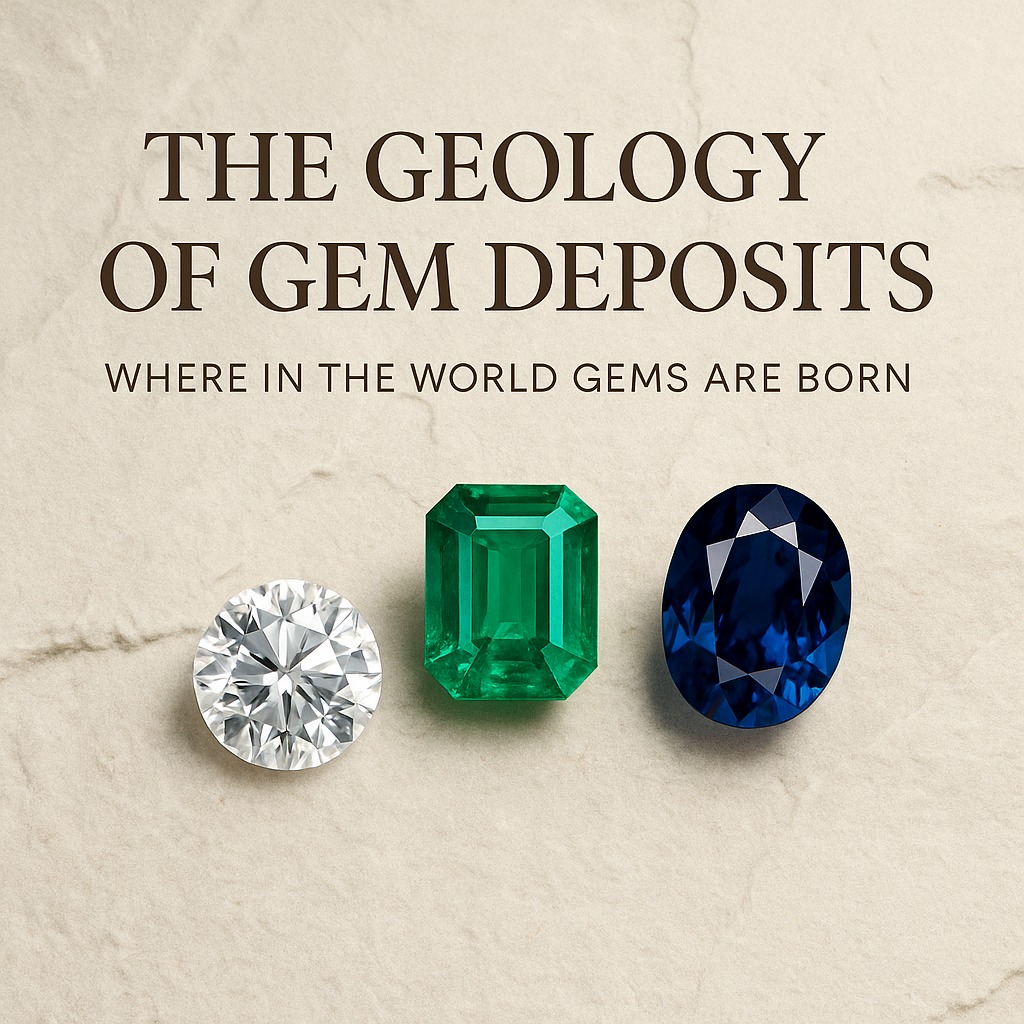
The Geology of Gem Deposits: Where in the World Gems Are Born
Every gemstone tells a story — not only of beauty and rarity but also of the earth’s powerful geological forces. Long before diamonds sparkle in jewellery or sapphires dazzle in heirlooms, they begin their journey deep underground, shaped by processes spanning millions of years. From volcanic eruptions to tectonic pressure, each gem carries the signature of the earth that bore it.
At PrinsGems, we believe understanding a gem’s geological origins deepens its meaning. To wear a jewel is to connect with an extraordinary natural journey.
Igneous Origins: Gems Born of Fire
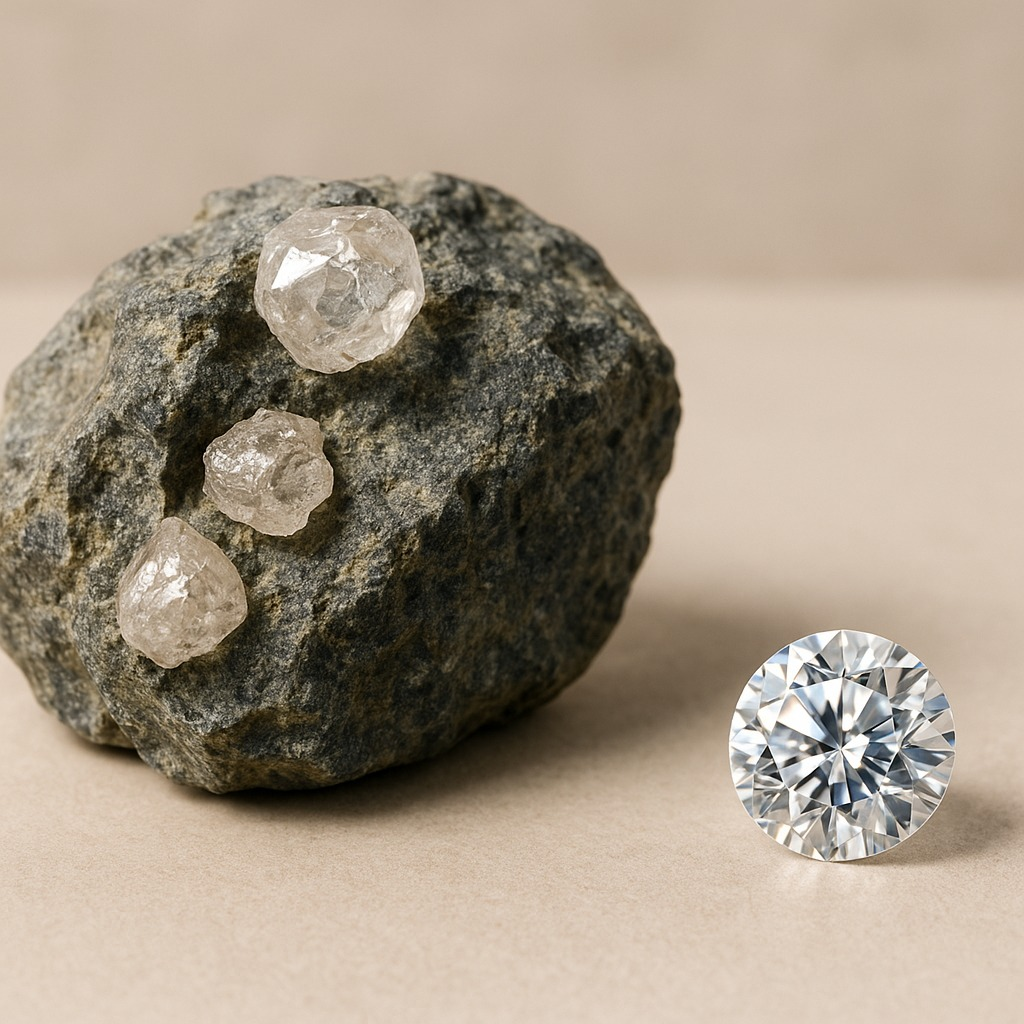
Some gemstones owe their existence to the fiery depths of the earth. Formed as molten magma cools, igneous deposits give rise to several of the world’s most treasured gems.
- Diamonds are perhaps the most iconic. Brought to the surface by volcanic eruptions in kimberlite and lamproite pipes, diamonds formed more than 3 billion years ago under immense heat and pressure. Southern Africa remains the world’s most famous diamond source, with deposits in South Africa, Botswana, and Namibia.
- Peridot, the green jewel associated with volcanic basalts, often appears in deposits from Hawaii to Pakistan.
- Topaz and Aquamarine also emerge from granitic pegmatites, where slow cooling allows large, well-formed crystals to develop.
These fiery origins highlight the raw geological power required to create gems of remarkable clarity and brilliance.
Metamorphic Gems: Beauty Under Pressure
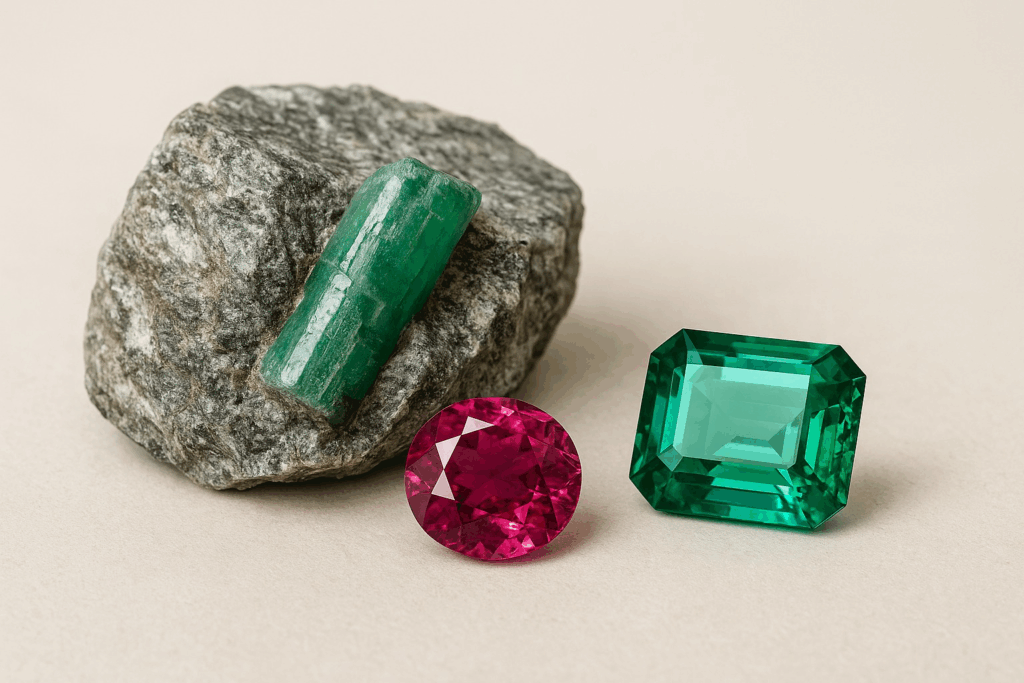
Metamorphic rocks are created when existing minerals undergo transformation due to intense heat and pressure. Within these crucibles of change, many of the world’s most famous gemstones are formed.
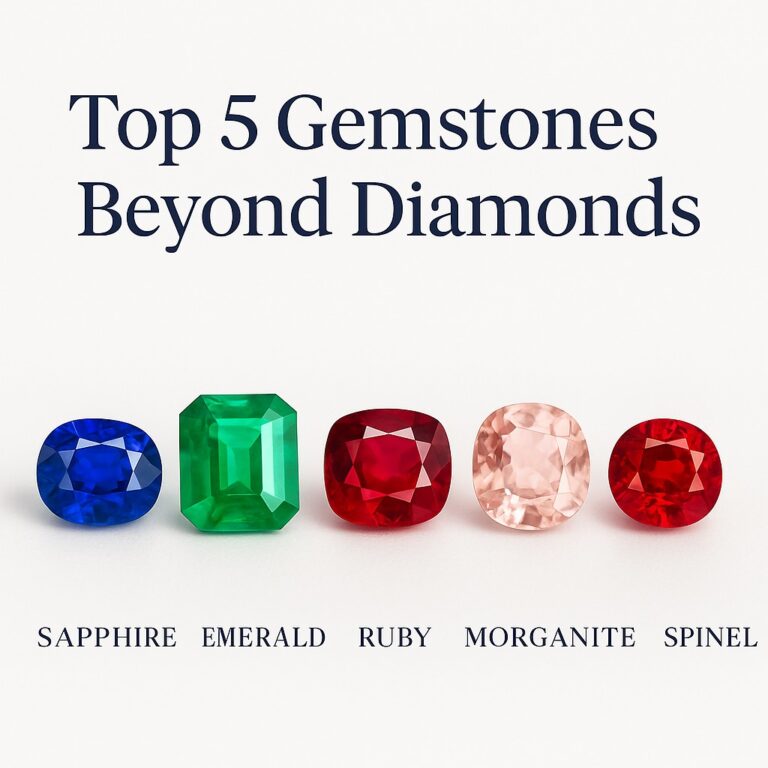
- Sapphires and Rubies (Corundum) are often found in metamorphic marbles and schists. The pressure and heat of tectonic activity transform simple minerals into these vividly coloured jewels.
- Emeralds, formed in schist or mica-rich rocks, acquire their distinct green hue from trace elements such as chromium or vanadium. Colombian emeralds, among the world’s most prized, were shaped in such unique geological conditions.
- Spinel and Garnet also thrive in metamorphic environments, prized for their range of colours and durability.
The brilliance of these gems is a direct reflection of the forces that shaped them — nature’s proof that beauty can emerge from intense pressure.
Sedimentary and Secondary Deposits: Gems Carried by Water

Not all gems are found deep within volcanic or metamorphic rocks. Many are transported by water into secondary deposits. Over centuries, rivers erode primary deposits and carry gems downstream, depositing them in gravels and sands.
- Alluvial Diamonds in Namibia’s coastline are among the clearest examples. Washed from ancient kimberlite pipes far inland, diamonds travelled down rivers and into the Atlantic Ocean, where they settled in marine gravels.
- Sri Lanka’s Sapphires have been recovered from alluvial gravels for centuries. Known as the “Island of Gems,” Sri Lanka’s secondary deposits have yielded sapphires, spinels, garnets, and moonstones.
These secondary deposits often provide the most accessible and high-quality gems, having been naturally sorted by water over millennia.
Famous Gem-Bearing Regions of the World
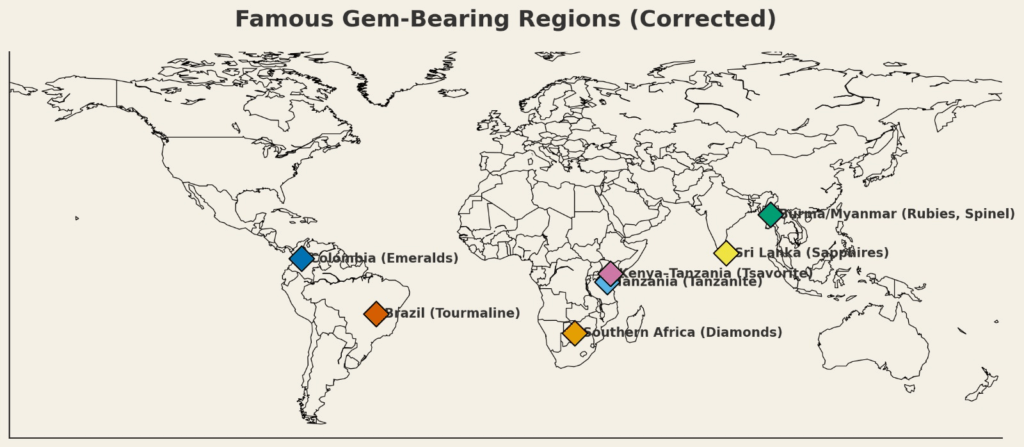
Throughout history, certain regions have become synonymous with specific gems. These deposits are celebrated not only for their quality but also for their enduring cultural significance.
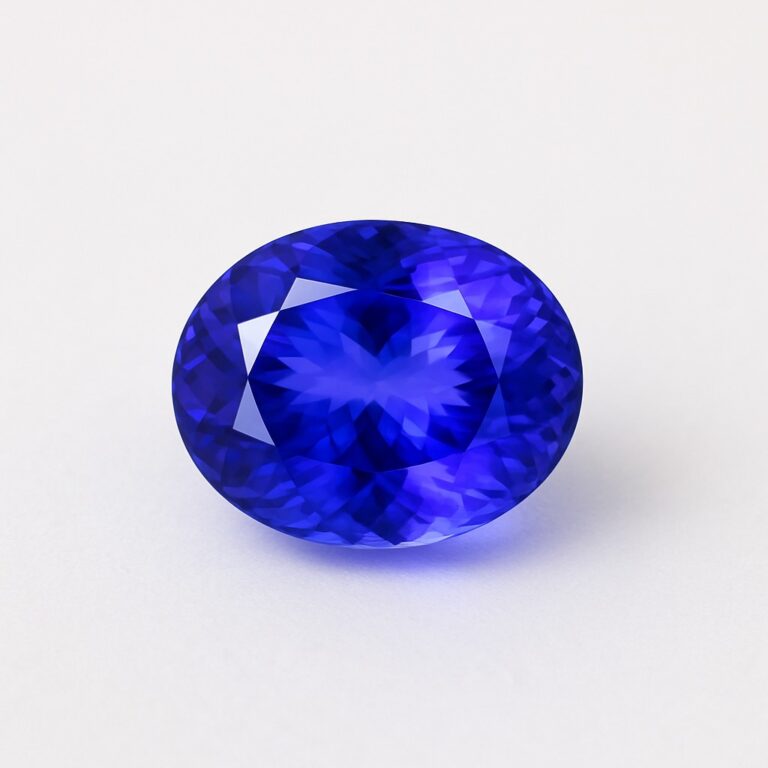
- Southern Africa – Renowned for diamonds, including historic South African mines and Botswana’s world-leading production. Tanzania is home to tanzanite, found only near Mount Kilimanjaro, while Kenya produces vivid tsavorites.
- Burma (Myanmar) – The Mogok Valley remains legendary for its “pigeon blood” rubies and vivid spinels.
- Sri Lanka – Known for its Ceylon sapphires, as well as a remarkable variety of gems recovered from its river gravels.
- Colombia – The world’s premier source of emeralds, producing gems of deep green with unmatched transparency.
- Brazil – Famous for its colourful tourmalines, imperial topaz, and aquamarine. Its vast geological landscape yields an unparalleled diversity of gems.
- East Africa – Mozambique and Tanzania have emerged as modern powerhouses, supplying rubies, spinels, and Paraíba-like tourmalines.
Each region offers gems with distinct qualities shaped by unique geological conditions — from the velvety blue of Kashmir sapphires to the electric glow of Brazilian Paraíba tourmalines.
Why Location Matters
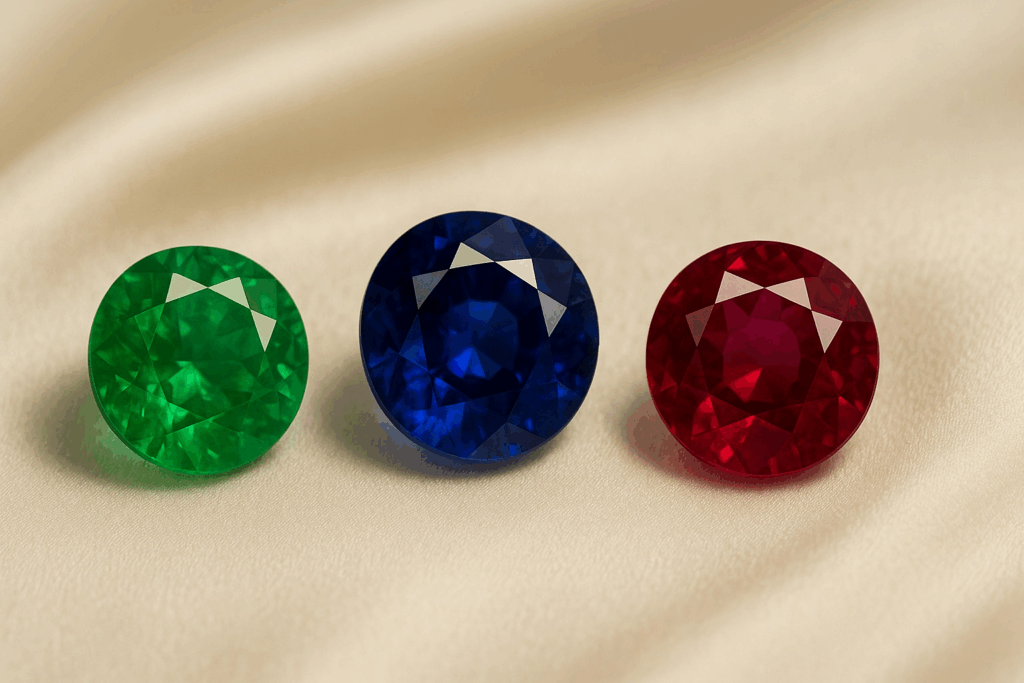
The origin of a gem is more than a geographical note — it often defines its character. Geological conditions such as mineral content, temperature, and pressure give gems their distinctive hues and qualities.
- Colombian Emeralds – Their lush green is attributed to rare geological chemistry involving black shale and hydrothermal fluids.
- Kashmir Sapphires – The region’s unique alpine geology gives sapphires a velvety, cornflower blue unmatched elsewhere.
- Mozambican Rubies – Modern discoveries in Mozambique have produced rubies with a depth of colour rivalling historic Burmese deposits.
In the world of gems, provenance is part of the story of value. Collectors seek not only beauty but also heritage — a gemstone with a traceable origin carries prestige and authenticity.
From Mine to Market: The Path of Gems
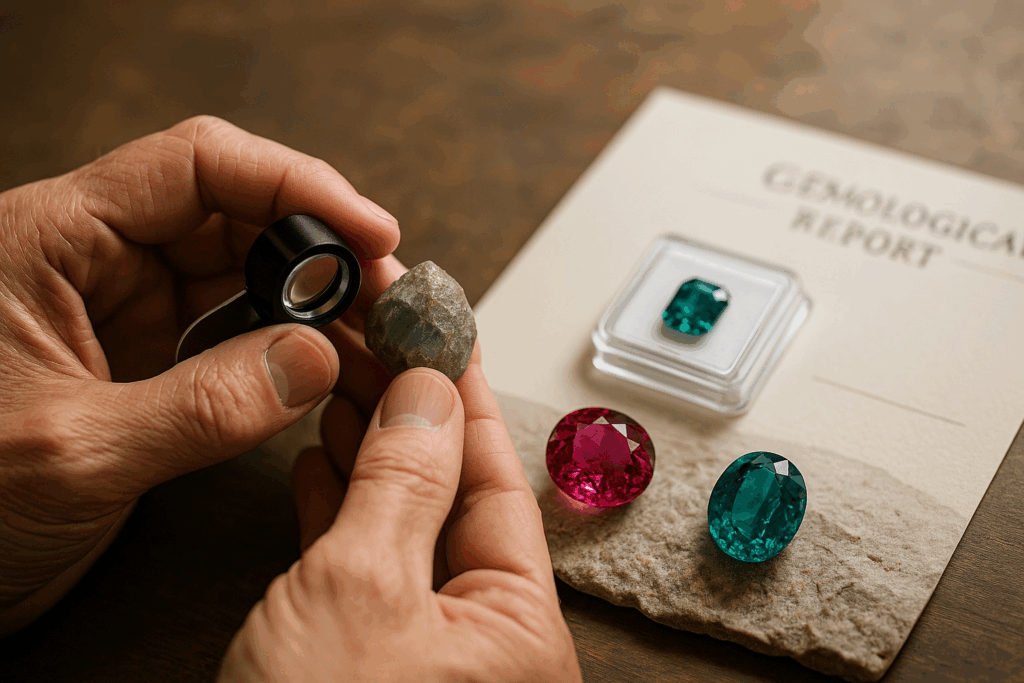
Once unearthed, gemstones embark on a journey from rough crystals to polished treasures. This path involves careful cutting, certification, and ethical sourcing — steps that preserve both their beauty and their integrity.
At PrinsGems, we source only certified gems, ensuring that each jewel’s provenance and authenticity are transparent. By working with trusted suppliers and adhering to international standards, we honour both the natural origins of the gem and the human craftsmanship that completes its journey.
Conclusion: Gems as Earth’s Heritage
Every diamond, emerald, ruby, or sapphire is more than a jewel — it is a fragment of the earth’s geological history. Born in fire, shaped by pressure, or carried by rivers, gemstones connect us to forces far older than humanity itself.
Cape Town, as a destination of heritage and luxury, allows travellers and collectors to experience this geological legacy first-hand. At PrinsGems, we curate certified gems from the world’s most storied deposits, offering not only beauty but also a deeper connection to the earth’s artistry.
To wear a gemstone is to carry a piece of the planet’s history — a jewel crafted by nature, celebrated by culture, and cherished for generations.