
The History of Garnets: From Ancient Amulets to Modern Jewellery
Few gemstones carry as much history and symbolism as the garnet. Known for its rich red glow and vibrant varieties, garnet has travelled across cultures and centuries, adorning pharaohs, warriors, merchants, and royalty alike. From protective talismans in ancient times to striking jewels in modern collections, garnet remains one of the most enduring gems in the world of jewellery.
Ancient Significance of Garnets

Garnets have been treasured for more than 5,000 years. The Egyptians placed them in burial amulets to guide souls safely into the afterlife, while the Romans carved garnets into signet rings used to stamp important documents in wax. Garnets also travelled the Silk Road, carried by traders as a prized commodity across Asia and Europe.
In Europe’s early Middle Ages, warriors wore garnet amulets as protective charms, believing the gem would bring courage and victory in battle. Viking chiefs were buried with their garnet-set weapons, convinced that the gemstone’s deep fire symbolised eternal strength.
Medieval and Renaissance Beliefs
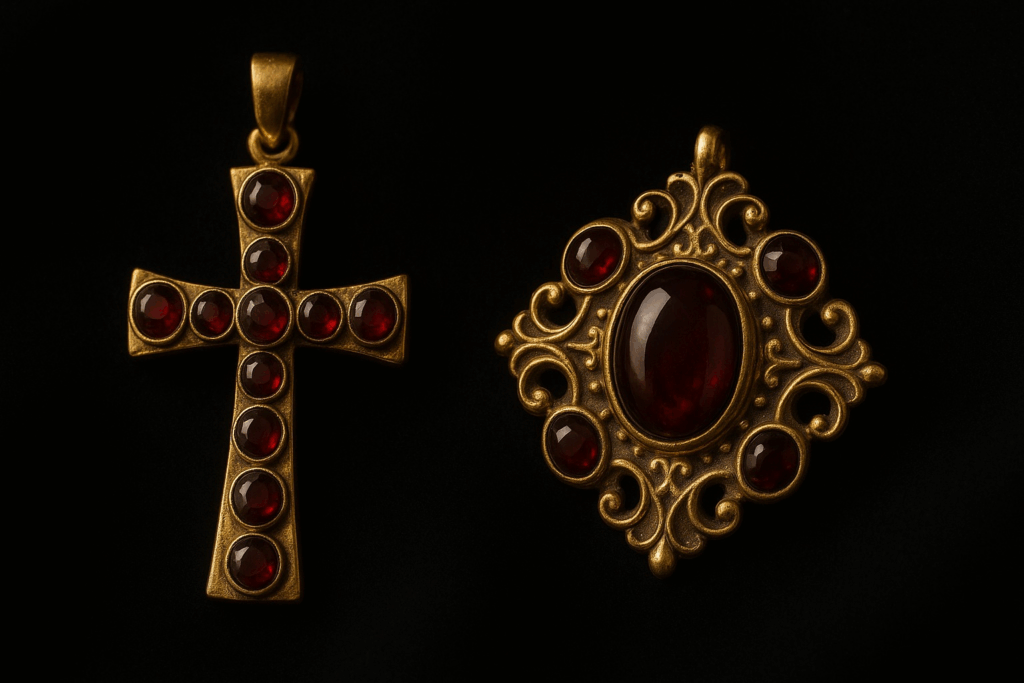
By the medieval period, garnets were associated with faith and healing. Clerics and nobles wore garnet jewellery to symbolise devotion and purity. It was also thought to cure ailments and protect against poisoning — beliefs that reflected garnet’s reputation as a gemstone of vitality.
During the Renaissance, the popularity of garnets flourished among the European aristocracy. The gemstone featured prominently in elaborate jewels and was admired for both its fiery appearance and symbolic depth.
Garnets in Modern Jewellery

Garnet experienced a revival in the Victorian era, when its deep red tones matched the romantic spirit of the age. Intricate garnet cluster rings and brooches became prized accessories, particularly in Europe.
Today, garnets are celebrated not only in their classic red hues but also in a wide spectrum of colours. Varieties include:
- Almandine and Pyrope – the deep red garnets most often associated with antique jewellery.
- Tsavorite – a rare, vibrant green garnet discovered in East Africa in the 20th century.
- Spessartite – glowing orange garnets, often found in Namibia and Mozambique.
These varieties have elevated garnet beyond its traditional identity, making it a versatile gemstone for both timeless and contemporary designs.
Why Garnets Endure

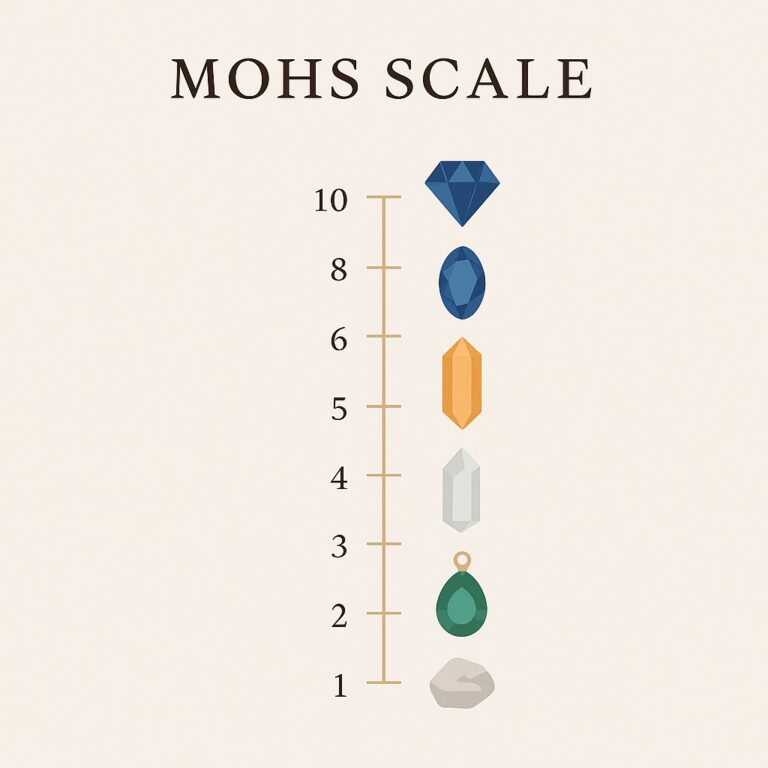
Garnets are more than beautiful jewels — they carry meanings of passion, prosperity, and protection. With a Mohs hardness of around 6.5 to 7.5, they are durable enough for regular wear while still requiring care to preserve their brilliance. Their wide range of colours and relative accessibility also make them popular for both collectors and jewellery lovers.
From ancient amulets to bespoke designs in modern ateliers, garnets continue to symbolise resilience and enduring beauty.
Explore Garnets with PrinsGems
At PrinsGems, our gemmologists curate garnets of exceptional quality — from classic reds to rare green tsavorites. Every gemstone is certified and selected to meet the highest standards of beauty and authenticity. Whether you seek a jewel with ancient heritage or a vibrant modern piece, garnets remain a timeless choice.