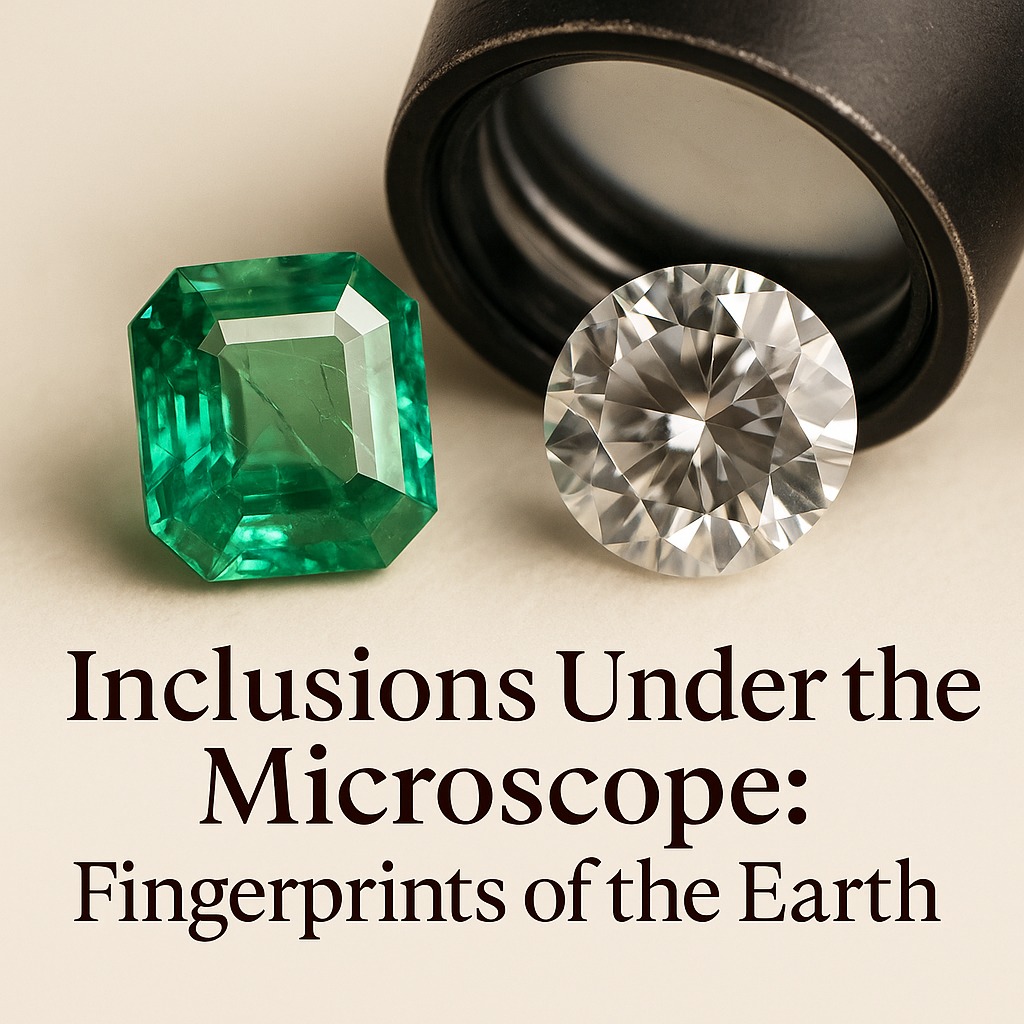
Inclusions Under the Microscope: Fingerprints of the Earth
When you hold a fine diamond or an emerald up to the light, it is easy to be mesmerised by its brilliance and colour. Yet deep within the heart of many gems lie subtle markings — whispers of the natural processes that shaped them. These internal features, known as inclusions, are often called the fingerprints of the Earth. Far from being mere imperfections, inclusions reveal where a gem came from, how it was formed, and what makes it truly unique.
At PrinsGems, we believe that inclusions connect us directly to a gemstone’s geological story. They remind us that natural gems are born of the earth, not produced by machines, and each carries a history that is both scientific and poetic.
What Are Inclusions?

Inclusions are features found inside a gemstone that formed during its natural growth. There may be other minerals, tiny fractures, fluid channels, or simply structural features within the crystal. To the untrained eye, inclusions might appear as small marks or faint clouds, but under magnification, they reveal extraordinary landscapes.
Every inclusion tells part of the gem’s story: the intense heat, pressure, and conditions that existed millions of years ago. For gemologists, inclusions serve as clues that confirm authenticity, reveal origin, and distinguish natural gems from synthetics or treated materials.
Types of Inclusions
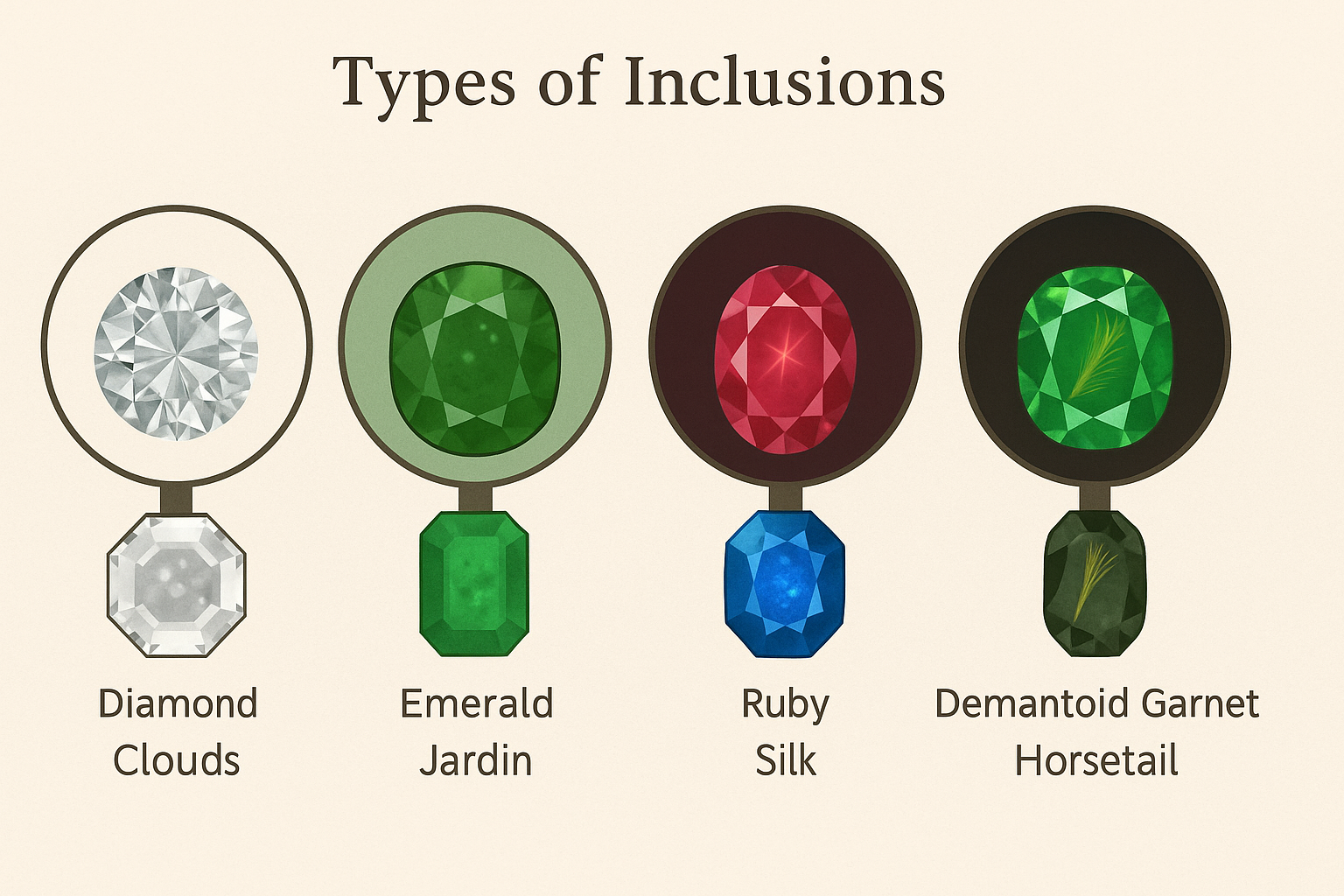
Not all inclusions are the same. Different gemstones carry characteristic features that can help gemmologists identify them.
- Diamonds – Common inclusions include pinpoints (tiny crystals), feathers (minute internal fractures), and clouds (clusters of pinpoints). Some diamonds also contain small mineral crystals trapped during formation, offering insight into the Earth’s mantle where they grew.
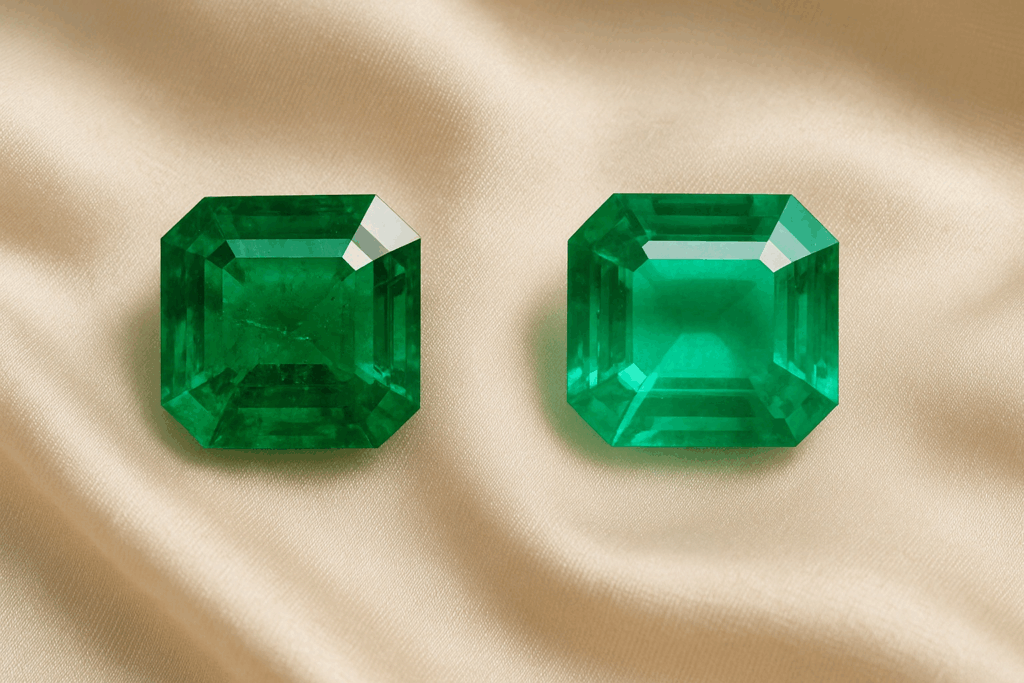
- Emeralds – Known for their jardin, or “garden,” emerald inclusions often resemble lush foliage under the microscope. These may be fluid-filled cavities or long-reaching fissures, and they serve as a hallmark of natural emeralds.
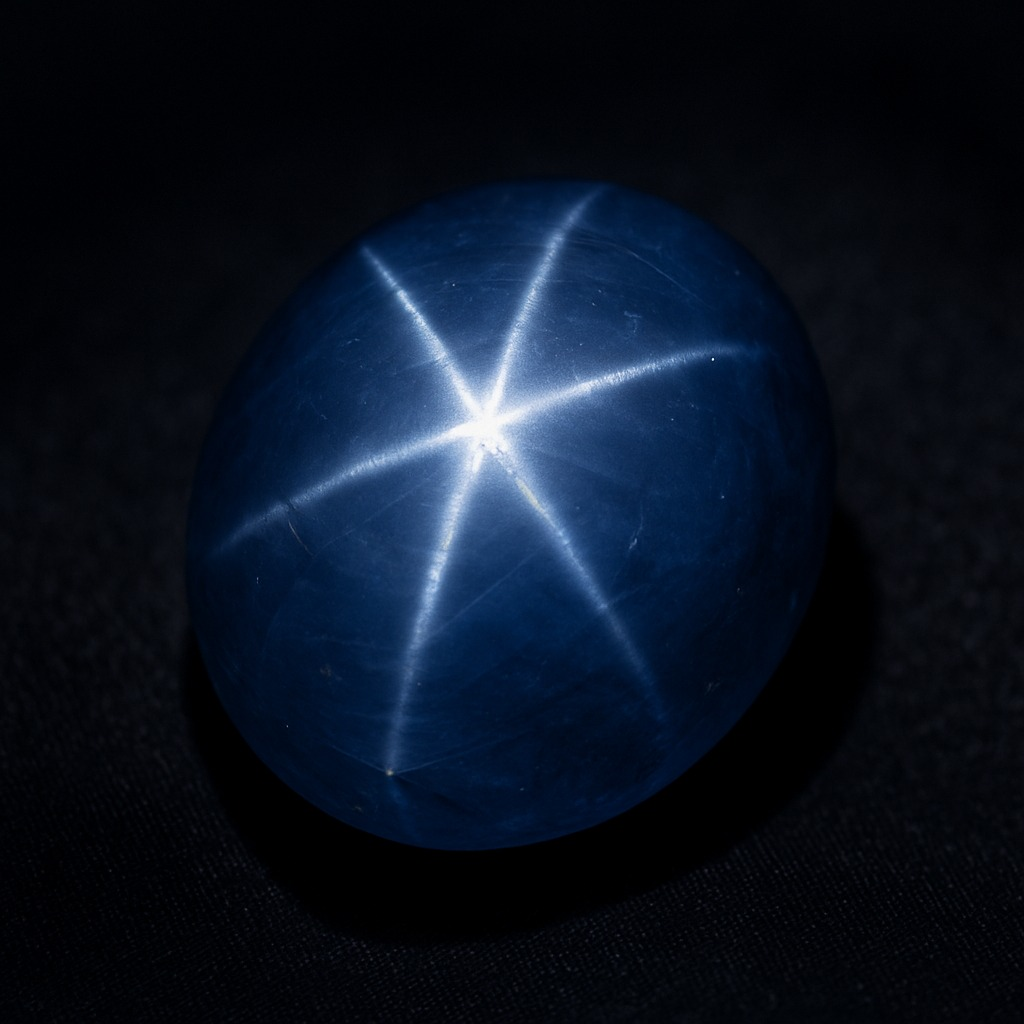
- Rubies and Sapphires – Corundum often contains rutile needles, known as “silk.” When present in just the right way, these inclusions can give rise to optical phenomena such as asterism, creating the rare and beautiful star sapphire.
- Spinel, Garnet, and Tourmaline – These gems may contain solid crystals of other minerals, growth zoning, or gas-filled cavities. In demantoid garnets, the celebrated “horsetail” inclusion — wispy golden fibres radiating from a crystal — is highly sought after by collectors.
Each type of inclusion not only helps identify the gemstone but also adds character, making each jewel as individual as a fingerprint.
Why Inclusions Matter
Inclusions are more than visual curiosities. They serve practical and scientific purposes:
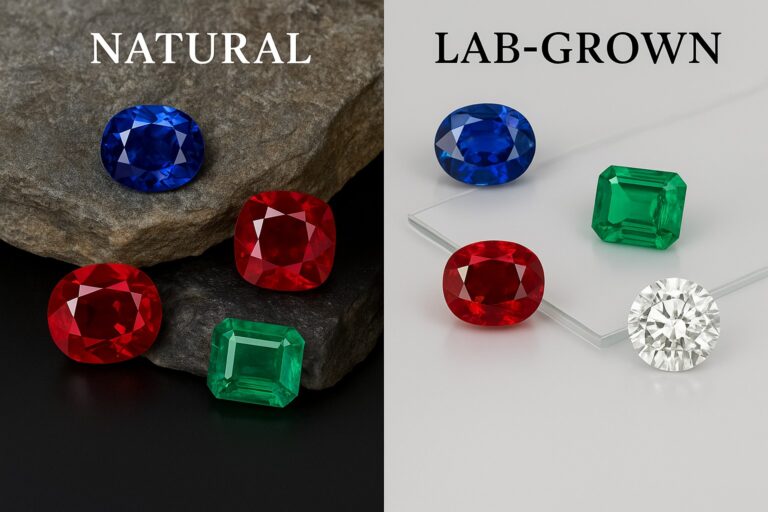
- Proof of Natural Origin – Inclusions are often the easiest way to distinguish natural gems from synthetics or simulants. Laboratory-grown diamonds, for instance, may display metallic flux inclusions not found in natural diamonds.
- Indicators of Provenance – Some inclusions are specific to certain mining areas. For example, three-phase inclusions (with liquid, gas, and a crystal) are typical in Colombian emeralds.
- Windows into Geological History – Inclusions allow scientists to study the conditions deep within the Earth’s crust and mantle. Diamonds containing inclusions of olivine or garnet provide valuable data on the formation of our planet.
For collectors and jewellers, inclusions are therefore not simply marks within a gem — they are signatures of authenticity and natural heritage.
Inclusions and Value
The impact of inclusions on a gem’s value depends on their type, size, and visibility.
- In diamonds, clarity grading is determined largely by inclusions. A diamond with very few or minute inclusions will be graded more highly, increasing its rarity and price. Large or eye-visible inclusions can reduce value, particularly if they affect brilliance or durability.
- In emeralds, inclusions are expected. A completely inclusion-free emerald is virtually unheard of and might even raise suspicion. Instead, emerald value depends on colour and transparency, with inclusions accepted as part of the gem’s identity.
- In rubies and sapphires, inclusions can influence both colour and optical effects. Rutile silk may reduce transparency but also create prized effects such as asterism.
- In collector gems, unique inclusions may actually enhance value. The horsetail inclusions in demantoid garnets or the delicate needles in rutilated quartz are valued precisely because they add distinctiveness.
Thus, inclusions are not always negative — in many cases, they increase a gem’s character and collectability.
The Beauty of Inclusions
Look closely under a microscope, and inclusions reveal hidden worlds of beauty. They can appear as delicate feathers, glittering crystals, or mysterious fluid bubbles. For some gems, inclusions are the very reason they are treasured.
- Star Sapphires – Caused by rutile silk inclusions that reflect light in a star-shaped pattern.
- Cat’s Eye Chrysoberyl – Its fine parallel inclusions create the striking eye-of-the-cat effect, highly valued in jewellery.
- Amber with Inclusions – Fossilised tree resin often contains trapped insects or plant matter, prized both scientifically and aesthetically.
These examples remind us that inclusions are not flaws but features — miniature landscapes encapsulated in time.
The Gemmologist’s Microscope

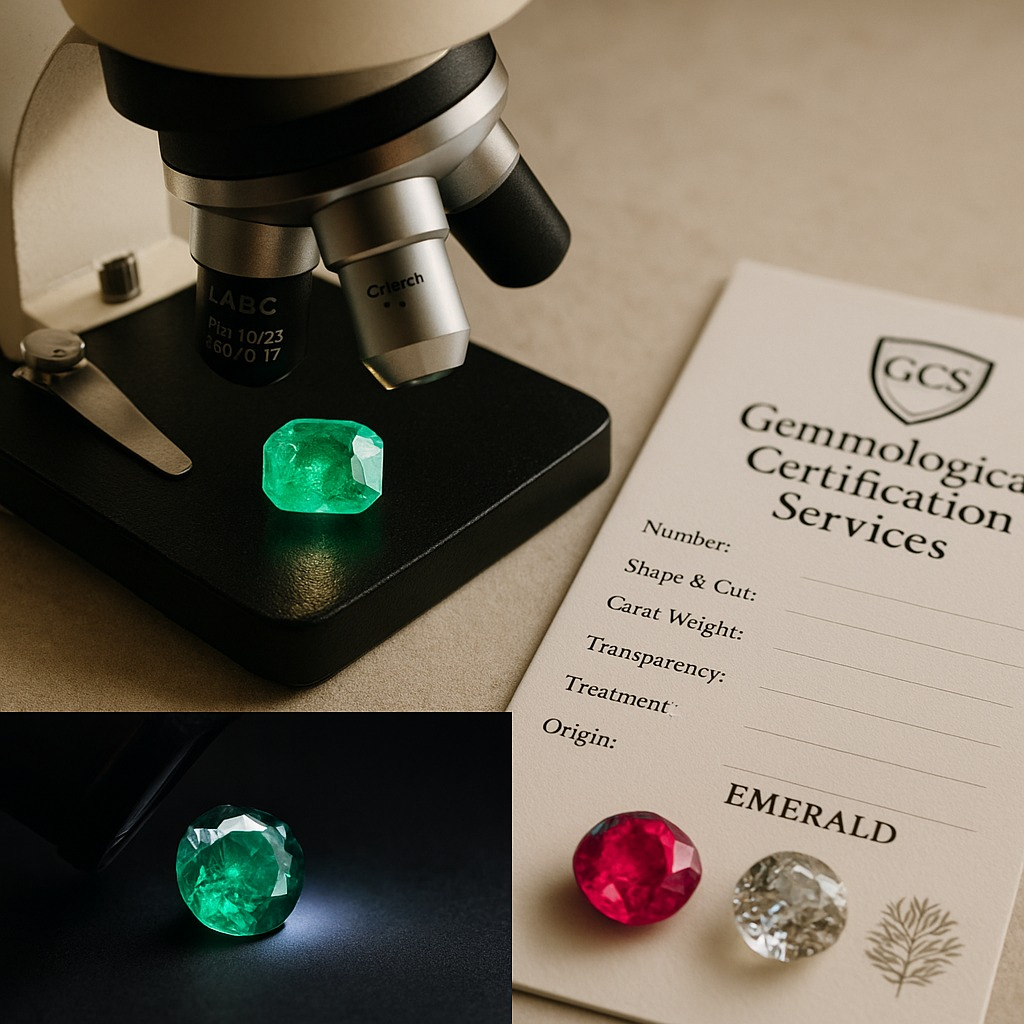
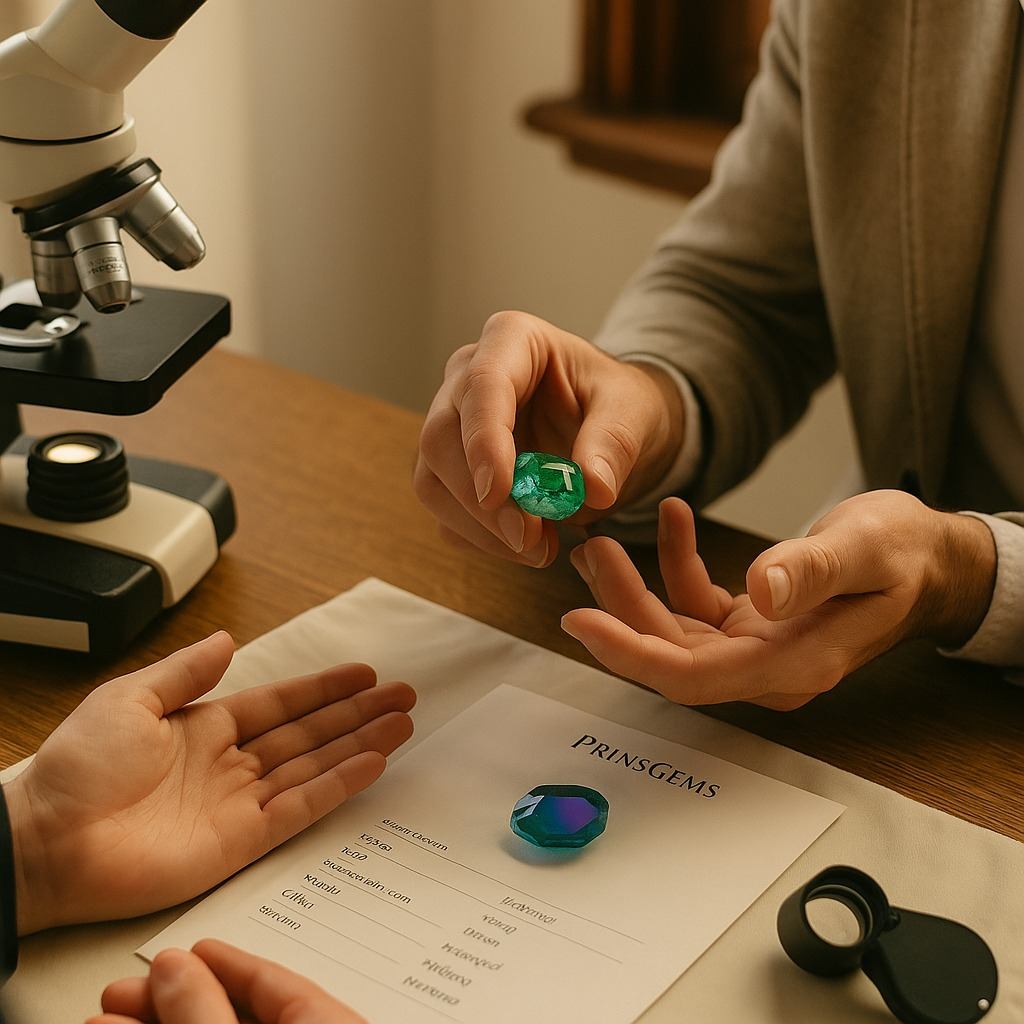
To the naked eye, many inclusions are invisible. It is under magnification that their secrets are revealed. Gemologists use loupes and microscopes to study inclusions carefully, assessing clarity, confirming authenticity, and recording features for certification.
Certification bodies such as the Gemmological Institute of America (GIA) or the Swiss Gemmological Institute (SSEF) detail inclusions on grading reports, ensuring transparency in trade. These reports give buyers confidence that their gem is natural and untreated, while also documenting its unique fingerprint.
At PrinsGems, we view inclusions as part of a gem’s individuality, and our gemmologists take pride in examining and explaining them to our clients.
Ethical and Cultural Perspective
In a world increasingly concerned with authenticity and ethical sourcing, inclusions remind us that natural gems are products of the earth’s deep history. They are evidence that a jewel was formed naturally, not manufactured in a factory.
For collectors and connoisseurs, inclusions can be celebrated as part of a gem’s narrative. In Cape Town, where heritage, gemmology, and craftsmanship meet, inclusions are appreciated not only as features but as stories — proof of a gem’s long journey from mine to market.
Conclusion: Fingerprints of the Earth
Inclusions are nature’s way of signing its work. They are the fingerprints left behind by geological processes that shaped gems over millions of years. Rather than diminishing beauty, inclusions often enrich it, telling the story of origin, authenticity, and individuality.
At PrinsGems, we see inclusions as an integral part of what makes each gem unique. They remind us that we are not only wearing jewels but also carrying fragments of the earth’s history — personal, authentic, and enduring.