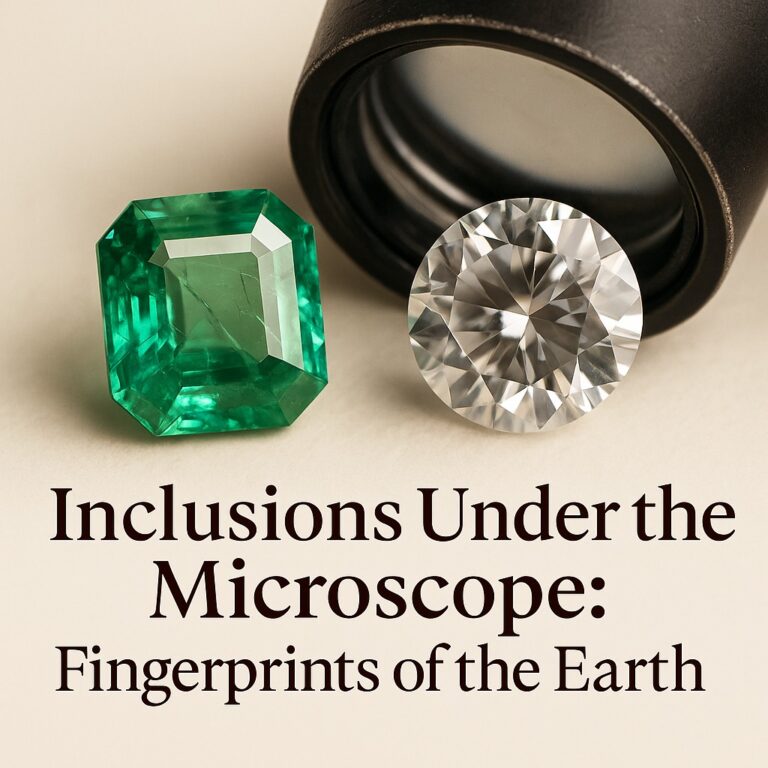

Why Some Gemstones Glow: The Science of Fluorescence
Gems have long fascinated us for their colour, brilliance, and rarity. Yet some possess an additional secret: the ability to glow under ultraviolet light. This phenomenon, known as fluorescence, transforms certain diamonds, rubies, and spinels into radiant jewels that reveal hidden beauty. To the untrained eye, fluorescence may appear as a magical trick, but to gemmologists it is a fascinating natural process rooted in chemistry and geology.
At PrinsGems, we believe that understanding the science behind gems deepens their allure. Fluorescence is one such wonder — proof that nature continues to surprise even the most experienced jewellers.
The Science of Fluorescence

Fluorescence occurs when a gem absorbs energy from ultraviolet (UV) light and then re-emits it as visible light. In essence, the gemstone “stores” invisible UV rays and transforms them into the colours we can see.
This effect is caused by trace elements or structural irregularities in the crystal lattice. When UV light excites electrons in these atoms, they jump to higher energy levels. As the electrons return to their original state, they release energy in the form of visible light — a glow that can range from subtle to intense.
The glow is only visible while the UV source is present, unlike phosphorescence, where the gem continues to shine briefly even after the light is removed.
Famous Fluorescent Gems
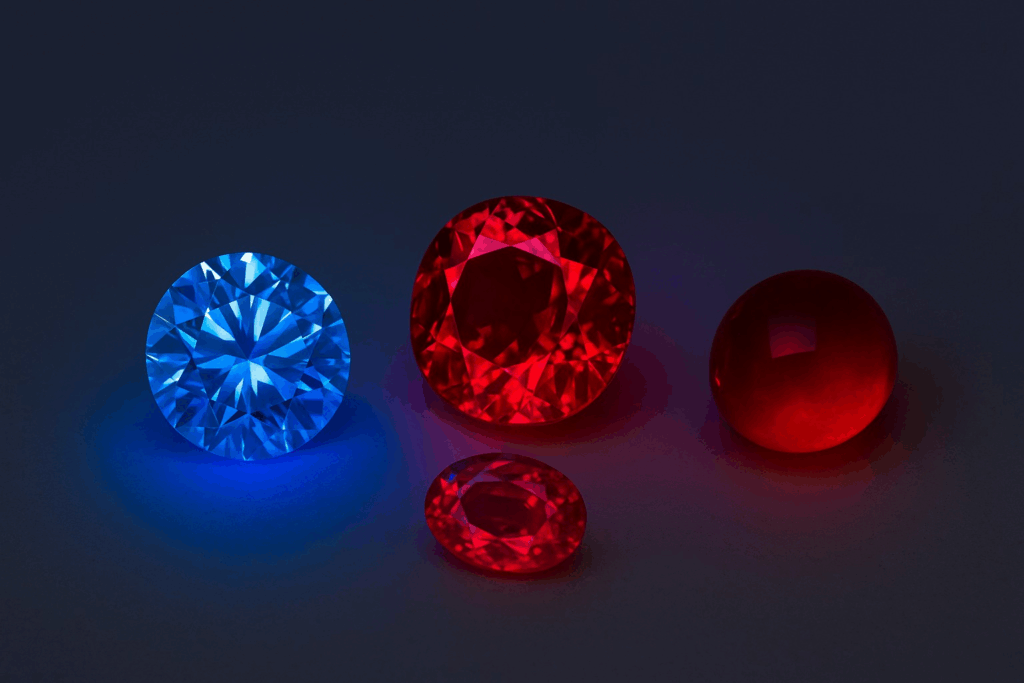
Not all gems exhibit fluorescence, but those that do have captivated collectors for centuries.
- Diamonds – Roughly 30% of natural diamonds display some degree of fluorescence, most commonly blue. Cape diamonds, historically mined in South Africa, are known for their characteristic blue glow under UV light. In some cases, this fluorescence enhances a diamond’s visual appeal, giving it a softer, whiter appearance in daylight.
- Rubies – Many rubies fluoresce strongly red due to chromium in their structure. This glow contributes to their fiery brilliance, especially in high-quality Burmese and Mozambican rubies.
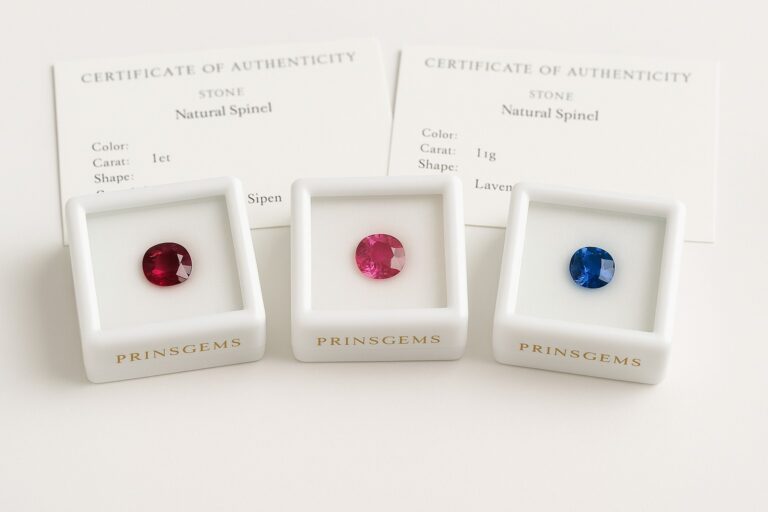
- Spinels – Certain spinels, particularly those rich in chromium, emit a bright red fluorescence that intensifies their natural colour.
- Other Minerals – Gems such as fluorite, scheelite, and some sapphires also display fluorescence, each with its own spectrum of colours.
This glowing effect is not uniform — two gems of the same type may react differently depending on their geological origin and trace element composition.
Why It Happens
Fluorescence is primarily influenced by impurities or trace elements within a gem’s crystal lattice. These are not flaws, but rather the secret ingredients that give gems their character.
- In diamonds, fluorescence is often linked to trace amounts of nitrogen.
- In rubies and spinels, chromium is the activating element that causes a vivid red glow.
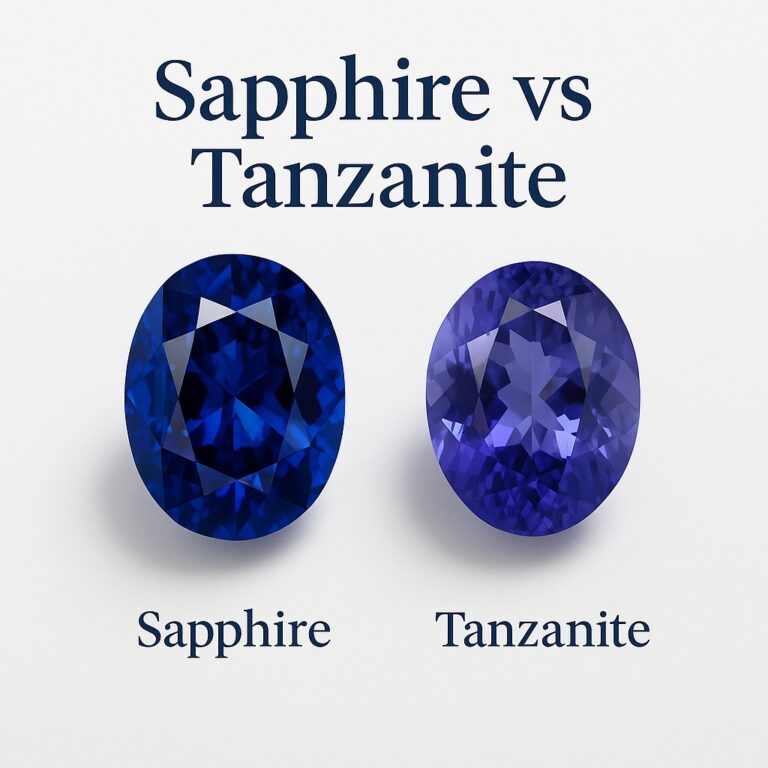
- In sapphires, iron can suppress fluorescence, which is why not all sapphires exhibit it.
Geological conditions also play a role. Gems formed under slightly different pressures, temperatures, or chemical environments may exhibit vastly different reactions to UV light.
Fluorescence and Value
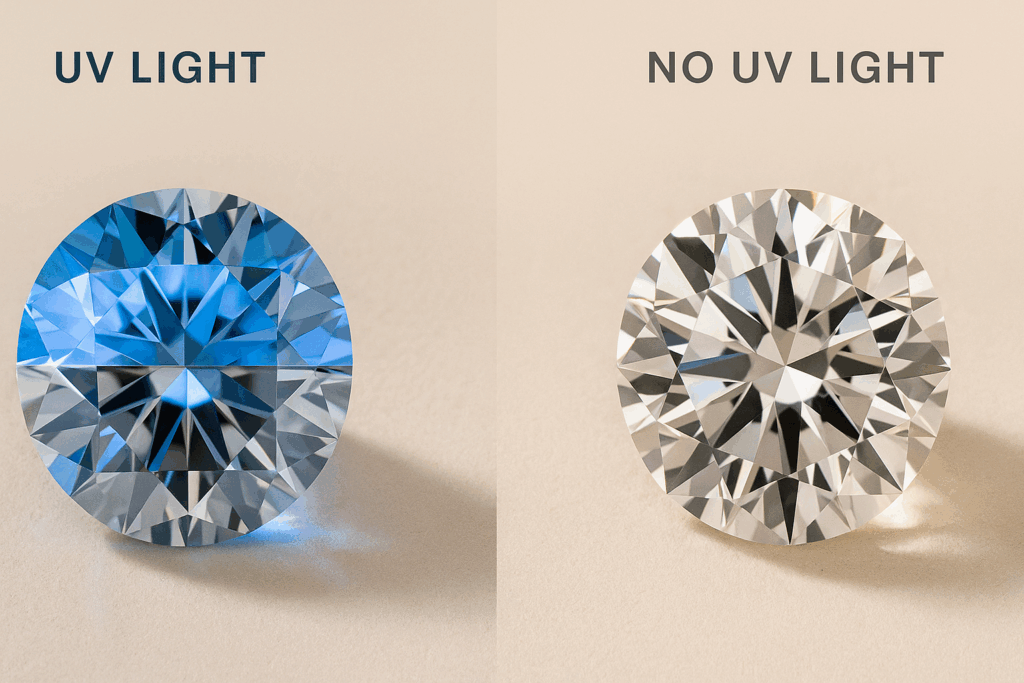
The effect of fluorescence on gem value is complex and depends on context.
- Diamonds – In most cases, faint to medium fluorescence has little effect on value. Strong blue fluorescence can sometimes improve a diamond’s face-up appearance, making it appear whiter in sunlight. However, in rare cases, very strong fluorescence may cause a milky or hazy look, which can lower value.
- Rubies and Spinels – Strong red fluorescence is generally considered a positive trait, enhancing their fiery colour and increasing desirability. Collectors often prize these gems for their intensity under UV light.
- Other Gems – For some, fluorescence is more a curiosity than a value driver, but it can still enhance a gem’s uniqueness.
Ultimately, fluorescence should be seen not as a flaw but as an additional characteristic — one more way to distinguish natural gems from mass-produced imitations.
The Collector’s Perspective
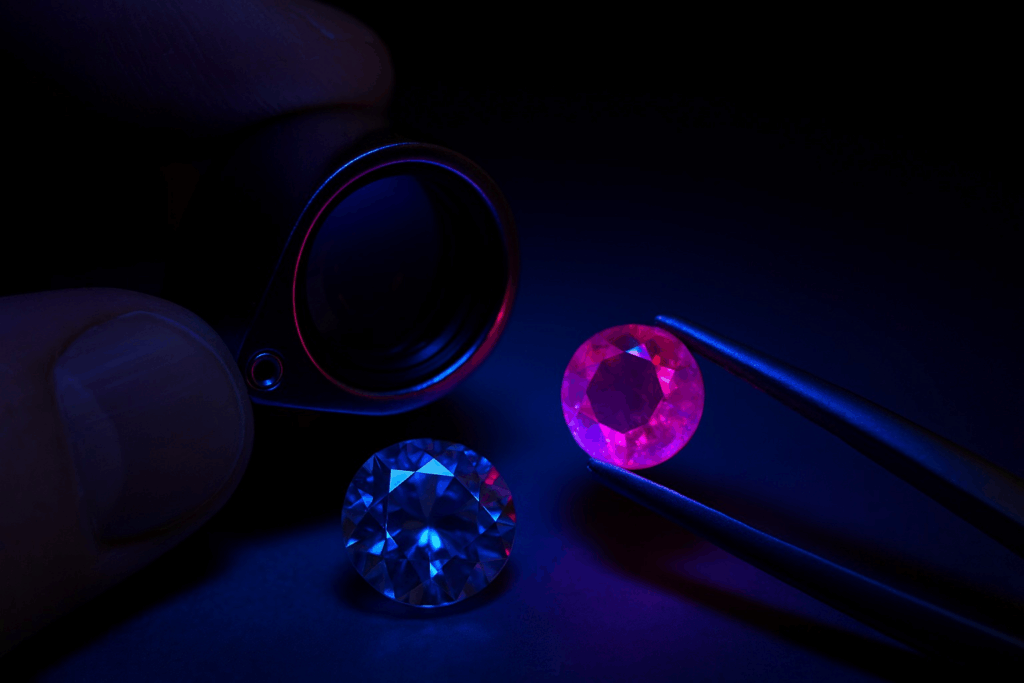
For gemmologists and collectors, fluorescence adds depth to a gemstone’s story. A gem that glows under UV light is more than a jewel; it is an interactive piece of nature’s artistry. Many collectors enjoy observing their gems under different lighting conditions, uncovering hidden hues that ordinary daylight conceals.
Fluorescence also serves as a diagnostic tool in gemmology. By studying a gem’s reaction to UV light, experts can gain clues about its identity, treatment history, or origin.
Fluorescence in Jewellery
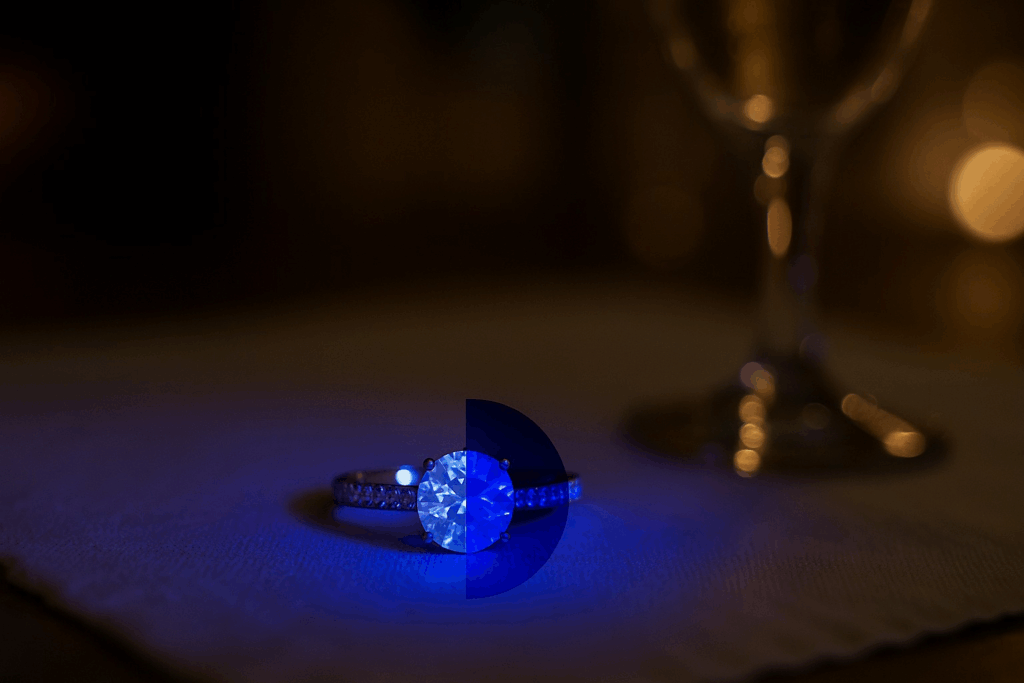
For the wearer, fluorescence offers a delightful surprise. In natural daylight, a diamond may look dazzling, but under UV-rich lighting — from a nightclub’s blacklight to strong midday sun — it may reveal a hidden glow.
Rubies may blaze brighter, and spinels may take on an almost electric quality. This dynamic play between light and gem adds to the mystique of fine jewellery, creating an experience that shifts depending on the environment.
Designers sometimes highlight this effect intentionally, knowing that fluorescence can transform a jewel into something unexpected and memorable.
Conclusion: A Hidden Glow of Nature
Fluorescence is one of nature’s quiet wonders. Born of chemistry and geology, it allows certain gems to reveal an inner light that is invisible under ordinary conditions. From Cape diamonds glowing blue to rubies blazing red, fluorescence is a reminder that every gem holds more secrets than we might imagine.
At PrinsGems, we curate certified gems with an appreciation for both their beauty and their scientific intrigue. To choose a fluorescent gem is to own a jewel with a hidden story — a radiant surprise waiting to be revealed under the right light.