Spinel: The “Imposter Gem” That Became a Collector’s Favourite
For centuries, spinel lived in the shadows of its more famous cousins, ruby and sapphire. Often mistaken for these better-known gems, spinel was once dismissed as an “imposter.” Yet history, science, and modern collecting have revealed a different truth: spinel is not only a distinguished gemstone in its own right but also one of the most exciting jewels in today’s market. From royal regalia to auction catalogues, spinel has made a remarkable journey from obscurity to prominence.
Historical Misidentification: The “Imposter” Era
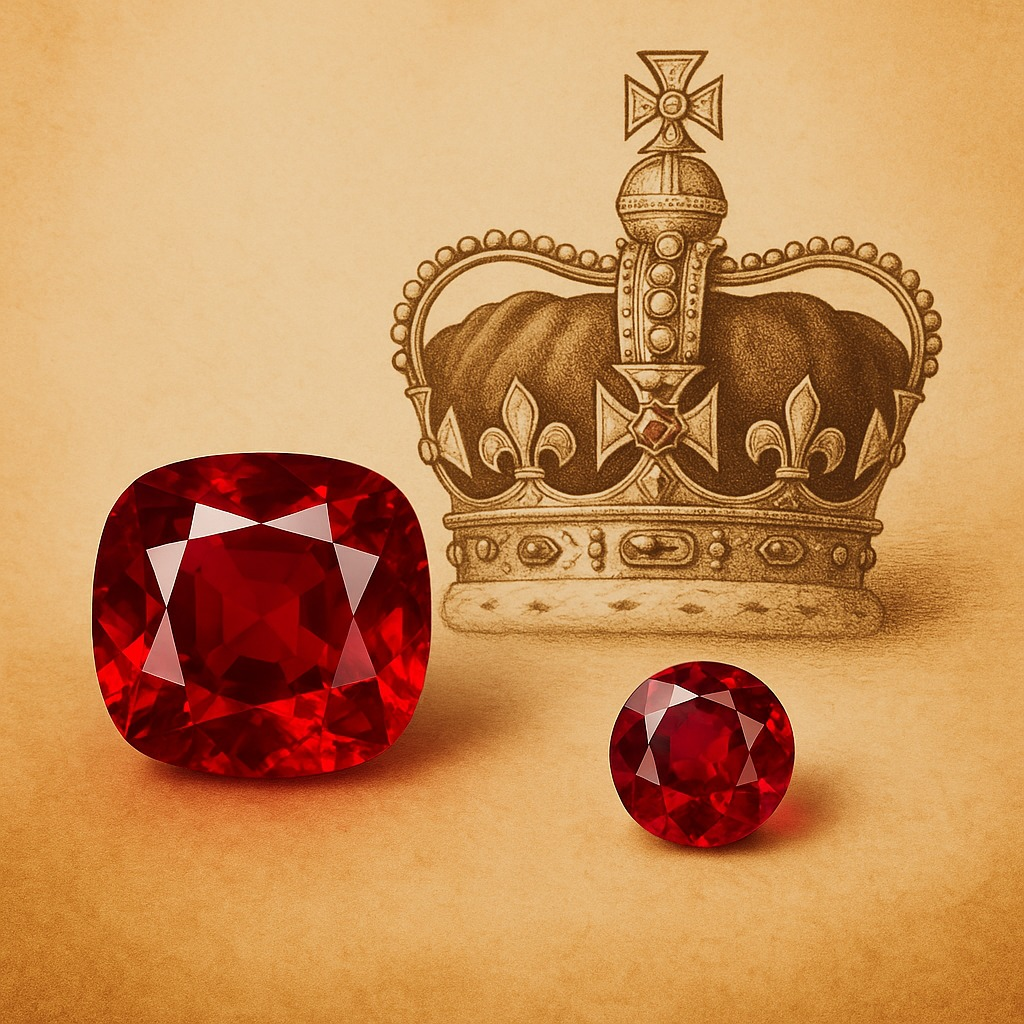
In the days before advanced gemmology, spinel was frequently confused with ruby. Both gems share striking red hues and are often found in the same deposits, making them almost indistinguishable to the eye. As a result, some of the world’s most famous “rubies” are, in fact, spinels.
The most famous example is the “Black Prince’s Ruby”, set in the Imperial State Crown of Britain. Despite its name, this vivid red cabochon is a large natural spinel. For centuries, monarchs believed they were wearing one of the world’s finest rubies. Only with modern testing was its true identity revealed.
This misidentification was not unique to Europe. Across Asia and the Middle East, spinel was mined and treasured under the assumption that it was ruby. Far from being an imposter, however, spinel was simply misunderstood — a testament to its similarity in colour and beauty.
Spinel’s Unique Qualities
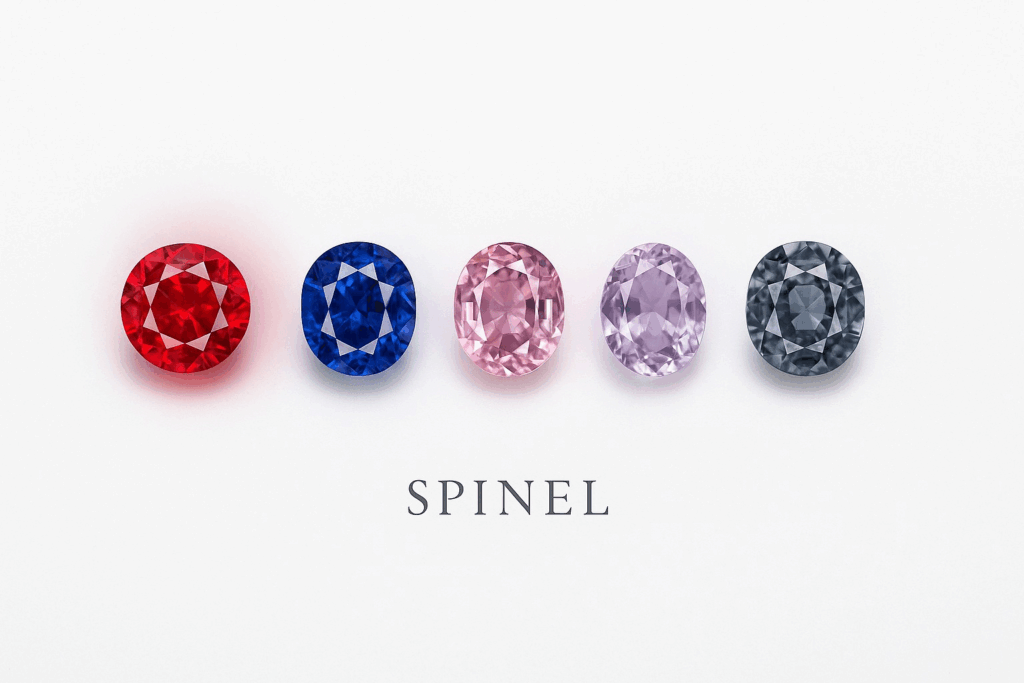
What makes spinel remarkable is not its history of mistaken identity but its intrinsic qualities.
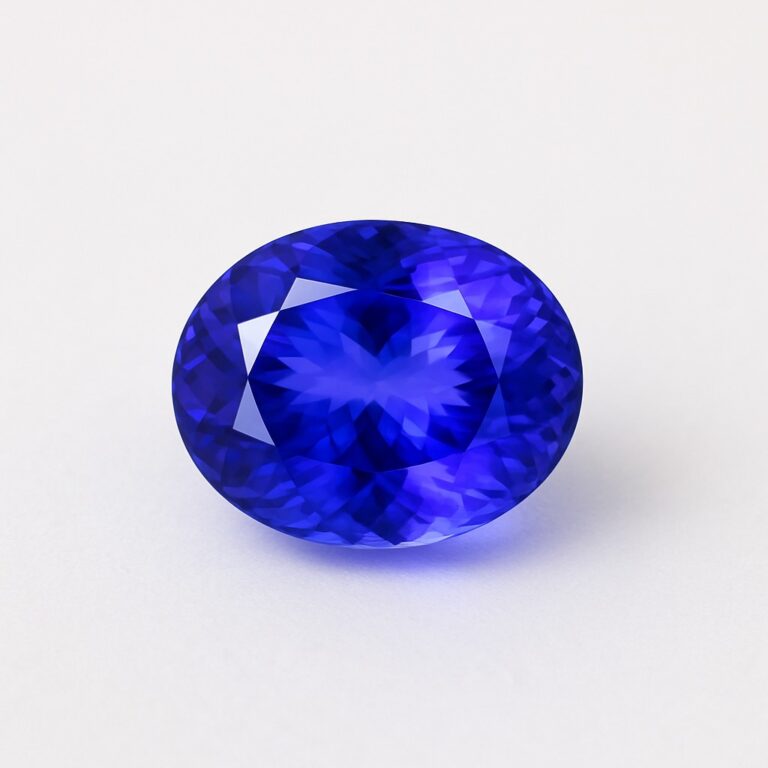
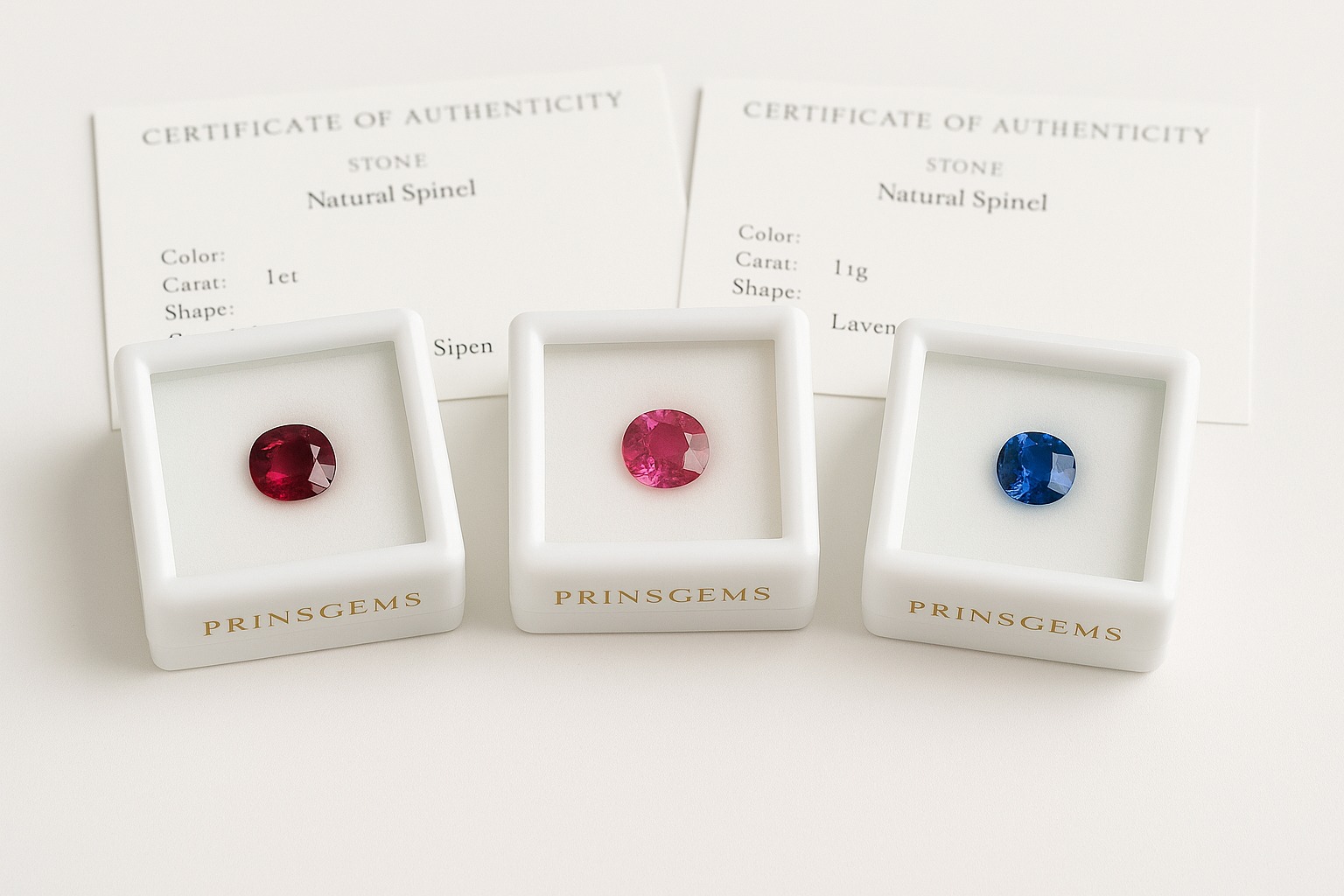
- Colour Range: Spinel occurs in a vibrant spectrum — from the finest vivid reds to pinks, blues, lavenders, and greys. Some cobalt-bearing spinels rival sapphires in brilliance.
- Brilliance and Fire: Spinel’s excellent crystal structure gives it a lively sparkle that competes with many of the most prized gems.
- Durability: With a hardness of 8 on the Mohs scale, spinel is tough enough for daily wear while retaining a polished lustre.
- Rarity: Fine natural spinel is rarer than many rubies and sapphires, particularly when untreated.
These characteristics mean spinel deserves to stand not as a substitute, but as a premier gem in its own right.
Modern Reappraisal: From Overlooked to Coveted

With advances in gemmology during the 19th and 20th centuries, spinel was formally recognised as a distinct mineral species, separate from corundum (the family that includes ruby and sapphire). This scientific clarity gave spinel its own identity and market presence.
In recent decades, spinel has undergone a dramatic reappraisal:
- Auction Recognition: Major auction houses such as Sotheby’s and Christie’s now feature fine spinel as marquee gems. Exceptional red spinels often command prices comparable to rubies.
- Birthstone Status: In 2016, spinel was officially added as an August birthstone, elevating its cultural significance.
- Collector Demand: With its rarity and variety, spinel has become a favourite among connoisseurs who value authenticity and distinction.
Today, spinel is no longer overlooked — it is celebrated as one of the great gems of the modern era.
Value and Collectability

Spinel’s investment appeal lies in its rarity and authenticity. Unlike many rubies and sapphires, spinel is seldom subjected to treatments, meaning that what collectors see is often entirely natural. This purity enhances both its desirability and its value.
- Fine red spinel is particularly prized, with prices steadily rising.
- Blue cobalt spinel has emerged as a new collector’s gem, celebrated for its vivid, saturated hues.
- Large spinel gems are especially rare, making them highly collectable at auction.
For collectors and investors alike, spinel represents both beauty and opportunity — a gem with growing recognition and enduring rarity.
Cultural and Symbolic Appeal
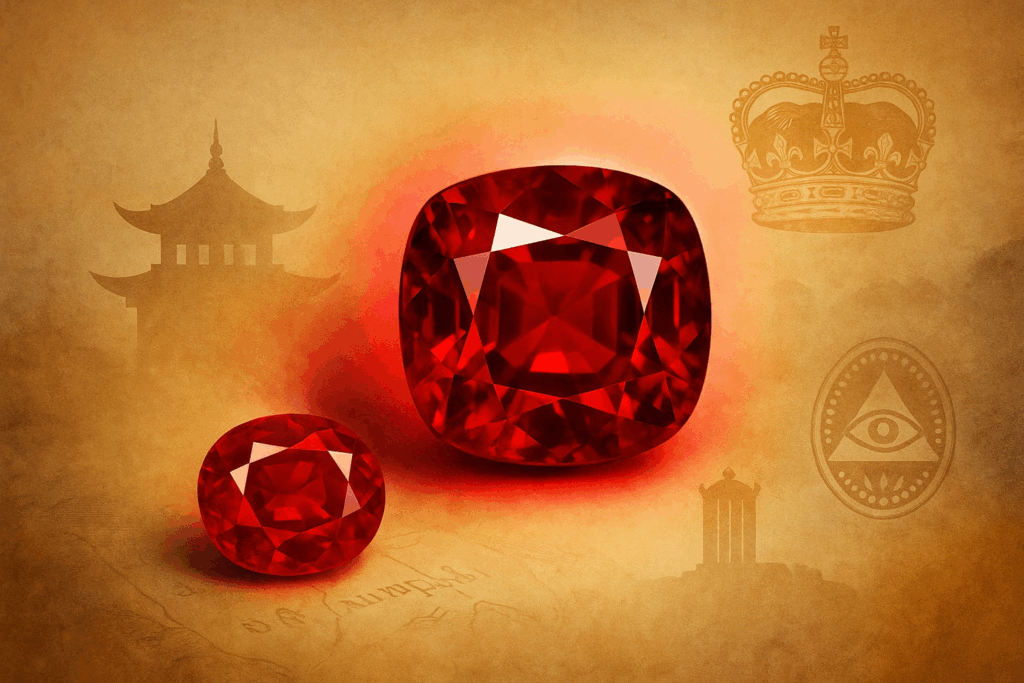
Spinel has also carried symbolic significance across cultures. In ancient Asia, red spinel was believed to embody vitality and protection. In Europe, it adorned crowns and sceptres as a symbol of authority. Today, spinel is admired for what it represents: clarity, authenticity, and the resilience of a gem once overshadowed, now standing proudly in the light.
The PrinsGems Perspective

At PrinsGems, we celebrate spinel not as an “imposter,” but as one of the most authentic and fascinating gems available today. Our gemmologists carefully select certified natural spinel, focusing on colour, rarity, and provenance.
By offering loose spinel gemstones, we give collectors the opportunity to appreciate their brilliance and individuality — whether the vivid red of a historic treasure or the cobalt blue of a modern rarity.
Conclusion: From Imposter to Icon
Spinel’s story is one of rediscovery. Once mistaken for ruby, it has now earned its place as a gemstone of prestige, rarity, and beauty. For those who value authenticity, spinel offers a compelling alternative to the more familiar “Big Three” of ruby, sapphire, and emerald.
To hold a spinel is to hold both history and rarity — a jewel once overlooked, now among the most coveted in the world.