
The Mohs Scale Explained: What Gem Hardness Really Means in Daily Wear
When choosing a gemstone for a piece of jewellery, beauty is only part of the story. Durability matters just as much, especially if you plan to wear the jewel daily. The Mohs scale of hardness is a simple but essential guide to understanding how resistant different gemstones are to scratches, and it plays a major role in how long your jewellery remains as brilliant as the day you bought it.
What Is the Mohs Scale?
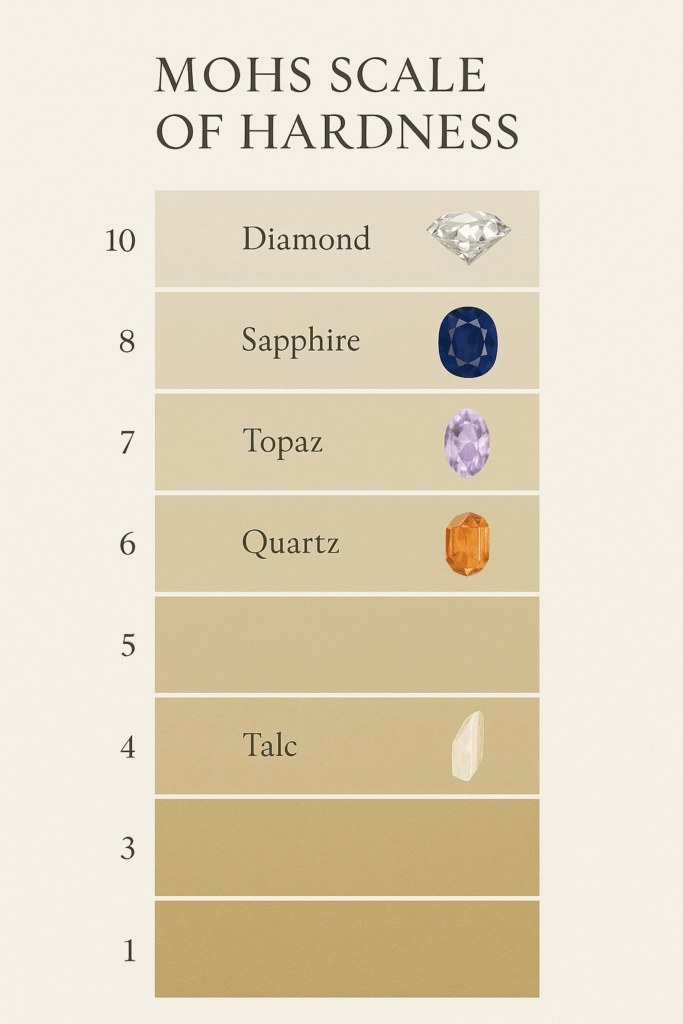
The Mohs scale was developed in 1812 by German mineralogist Friedrich Mohs to rank minerals by their resistance to scratching. The scale runs from 1 to 10, with talc at the softest end and diamonds at the hardest. Each level can scratch those below it but will be marked by those above.
For example:
- Quartz (7) can scratch topaz (8) but not sapphire (9).
- Emerald (7.5–8) resists many scratches but can still be damaged by harder gems.
- Diamond (10), the hardest natural material known, can only be scratched by another diamond.
This simple system helps gemmologists and jewellers explain how suitable a gemstone is for different types of jewellery.
Hardness vs. Toughness

It is important to understand that hardness does not equal toughness. Hardness refers specifically to scratch resistance, while toughness relates to how well a gem withstands knocks and chips. For example, diamonds are the hardest gems, but their cleavage planes make them vulnerable to sharp blows. Jade, by contrast, is less hard but very tough, meaning it resists breakage well.
Understanding this distinction helps clients choose jewellery that fits their lifestyle.
What Hardness Means in Daily Wear
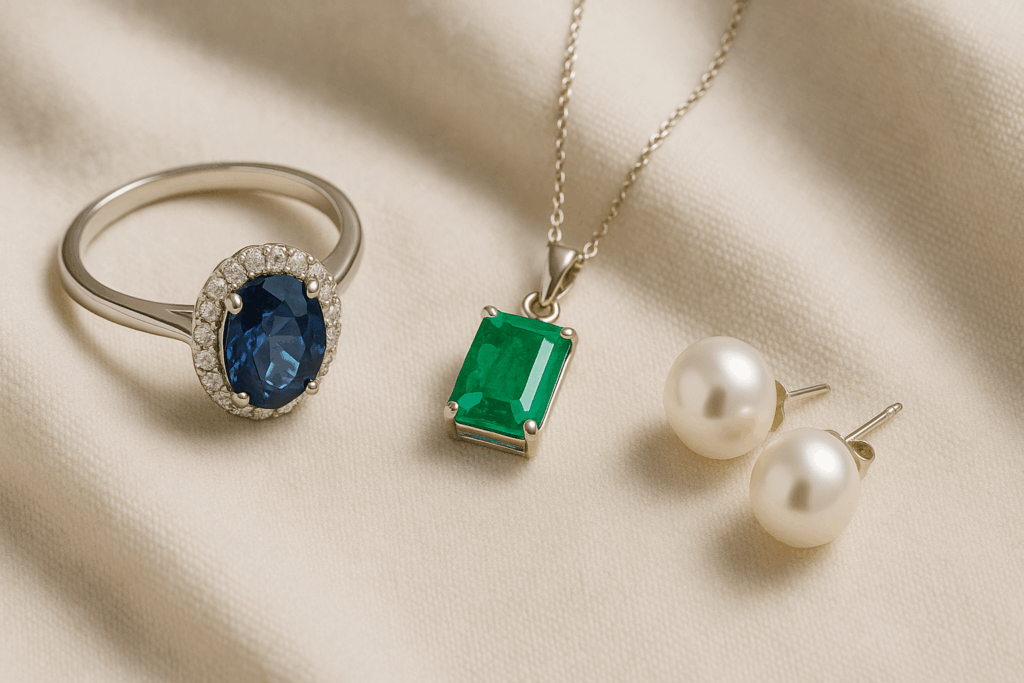
Jewellery is exposed to countless everyday risks — from brushing against a desk, to handling cooking utensils, to gardening. Softer gemstones are more likely to show scratches, while harder ones retain their polish for longer.
- Everyday wear (rings, bracelets, watches): Gems rated 8 or higher, such as sapphire, ruby, and diamond, are ideal because they withstand constant contact.
- Occasional wear (earrings, pendants, brooches): Emerald, tanzanite, opal, and pearls can be worn safely but benefit from gentler use and protective settings.
- Collectors’ or statement pieces: Softer gems such as turquoise, apatite, or fluorite are best reserved for special occasions.
Caring for Softer Gemstones
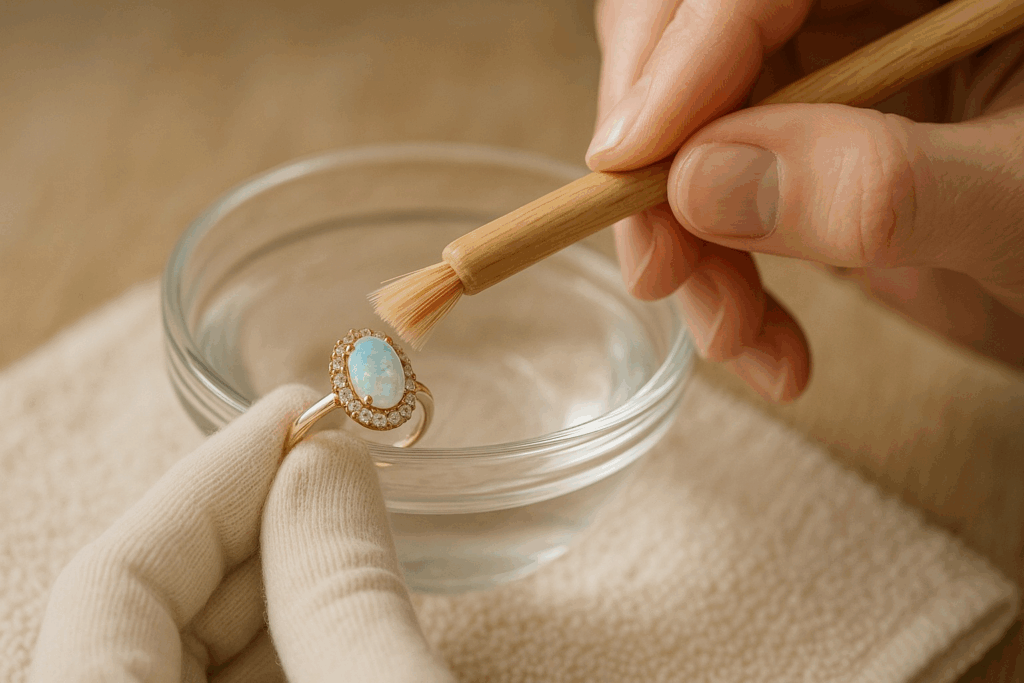
Even if you fall in love with a gemstone lower on the Mohs scale, you can still enjoy it for years with the right care:
- Choose protective settings such as bezels for rings or pendants.
- Reserve them for special wear rather than daily use.
- Store jewellery separately to prevent harder gems from scratching softer ones.
- Clean gently with warm soapy water and a soft brush — avoid harsh chemicals and ultrasonic cleaners.
These measures preserve brilliance while allowing you to enjoy the unique colours and personalities of less durable gemstones.
Choosing with Confidence
The Mohs scale is more than a scientific measure; it is a practical tool for choosing jewellery that lasts. Whether you prefer the indestructible brilliance of a diamond, the regal hues of sapphire, or the velvety charm of tanzanite, understanding hardness helps you select jewels that suit your lifestyle.
At PrinsGems, every gemstone is certified and carefully curated for both beauty and longevity. Our gemologists guide you in selecting the right jewel, ensuring it remains a treasured companion for decades to come.